Located
in Wanlan Town, Zhenfeng County, in China’s Guizhou Province, Guizhou Electric
Power Design and Research Institute's 105MW photovoltaic plant has already achieved
a significant demonstration profile locally. The large scale deployment of LONGi’s
Hi-MO 4 module (166mm) with high power, lower BOS cost and lower LCOE, has
brought higher power generation gains to the project owner and showcased the advantages
in the
construction process of the plant.
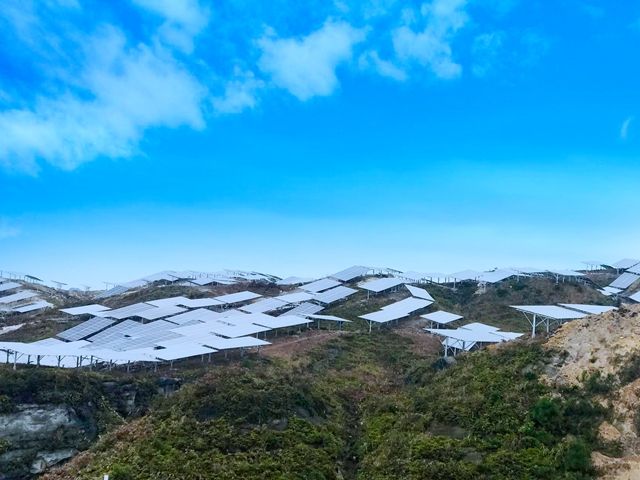
The
project is built on the mountainous terrain of Yunnan-Guizhou and is divided
into 5 areas with a total of 40 photovoltaic power generation square arrays.
Each sub-square array is boosted to a voltage level of 35kV by using a 2000kVA
box inverter integrated device. The electric line is connected to the 35kV bus
bar of the booster station.
The
rugged terrain of the project, with the pre-buried piles having basically been artificially
poured, will inevitably make any construction process more complex and time
consuming. Generally speaking, 4 people can pour 20 pile foundations in one
day, with an extra day required for solidification. Using the high-power Hi-MO 4
module (166mm wafer), the pile foundation requirement is reduced by about 8%, significantly
shortening transportation time and effectively reducing the amount of
engineering necessary, thus improving construction efficiency.
"LONGi’s Hi-MO 4 module has high power
generation, especially in the application of large-scale ground power stations,
and also has a reliable and stable long-term power generation capability. With
the same installation capacity, the use of Hi-MO 4 shortens the tracker
installation process. As the number of module installations is reduced, the
manual installation cost is lowered by about 6%, which brings significant
benefits to the owner," said the person in charge of the power plant.
Wanlan
Town has good soil conditions but, due to its steep terrain, it has remained
under developed. This project adopted the model of integrated photovoltaic and
agricultural power generation. It will create agricultural economic benefits
while simultaneously generating electricity, bringing more employment
opportunities for local farmers who live near the villages and towns, effectively
promoting the development of emerging industries.
 Global English