LONGi, China’s
leading solar technology company headquartered in Xi’an, Shaanxi Province, has announced
that the company has supplied 100MW of its Hi-MO4m monofacial PERC modules to
China Datang Corporation’s first floating solar plant in Hunan Province. It is
established practice for the Datang Corporation to implement the strategic
deployment of new energy, the floating solar plant being part of the 100MW“Fishery-Solar Complementary” project owned by the
Corporation’s subsidiary, Datang Huayin Electric Power.
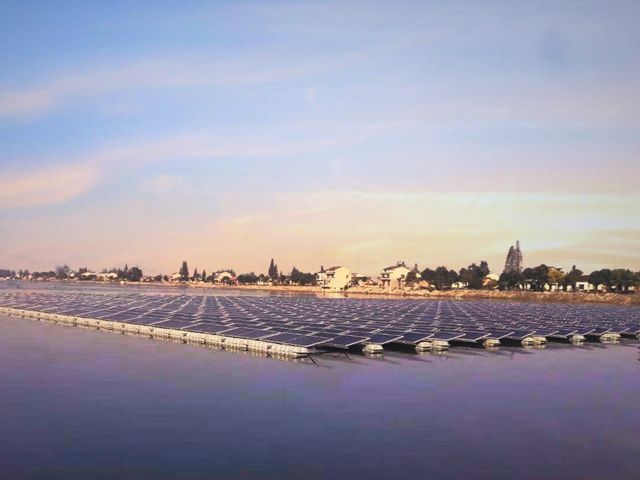
Located
in the water area of Changhe, Sihushan Town, Yiyang City, the project is the first floating solar
plant in Hunan Province to integrate ecological and environmental protection with
power generation. It has great significance in realizing the Datang
Corporation’s goal of "building a world-class energy enterprise," implementing
its stated policy of restoring ecology and returning fishing to the Dongting
Lake.
With a total
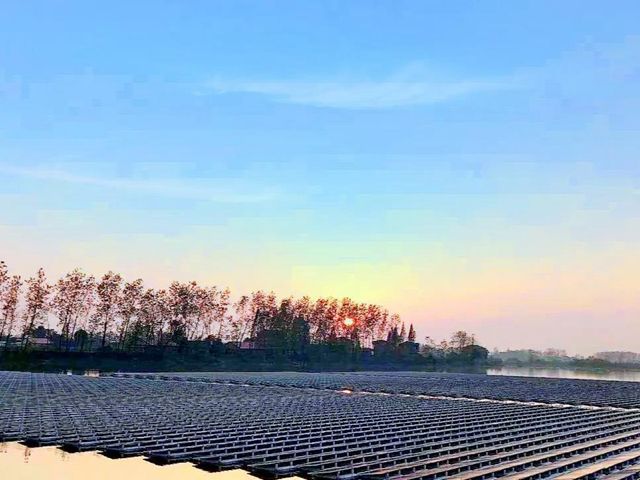
of 100MW of installed capacity, the floating plant is built incorporating PV
power generation arrays, 35Kv power distribution and quality stability facilities,
a 110Kv booster station and an operational management center. This is the first
cooperation between LONGi and Datang Huayin Electric Power.
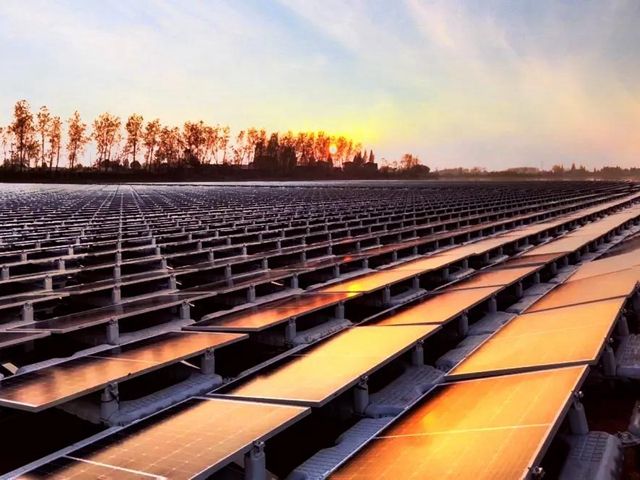
The plant
has adopted LONGi Hi-MO4m monofacial PERC modules and a
floating system from Sungrow Power, a key high-tech enterprise focused on the
R&D of new energy in China, and one of LONGi’s technology partners. Generally,
the BOS cost of a floating solar plant is significantly higher than that of a ground
mount plant, but the LONGi Hi-MO4m module can help reduce the BOS cost element
of a floating configuration, creating value for the project owner.
Datang
Huayin were very complimentary toward the LONGi team, both in terms of
completing delivery according to the agreed schedule and on module quality
control.
According
to Datang Corporation estimates, the project can save 40,000 tons of standard
coal annually, reduce 721 tons of sulphur dioxide, 1083 tons of nitrogen oxide
and 100,000 tons of carbon dioxide, also saving 540,000 tons of water, thus
delivering what it describes as valuable "sunlight wealth" for local
residents. The project has also enabled five bumper “harvests” of fishing,
electricity, tourism, environmental protection and taxation, making a
significant contribution to the local economy and environment.
 Global English