German
based photovoltaic media PV Magazine presented its latest outdoor test result
about energy yield scores of different modules on its magazine version of
January 2019. The result shows bifacial PERC module from LONGi ranked No.1
within all the modules tested, and LONGi’s two mono PERC products occupies top
2 in power generation within all the monofacial modules.
The outdoor
test started to release test result on monthly PV Magazine from June, 2018. The
data of November showed that a bifacial mono PERC module from LONGi which
joined the game from October ranked No.1 with an energy yield of 78.71 Wh/Wp.
This figure is significantly leading over the second and the others, higher by
3.64% over the other two bifacial modules and averagely 7.27% higher than other
monofacial modules. Meanwhile, one of LONGi’s monofacial PERC module recorded
even higher energy yield than bifacial modules from other manufacturers. It
might be related to the excellent low-irradiance power generation capability of
LONGi’s modules (the intensity of illumination in November is significantly
lower than that in other months, and the monthly energy yield is ~75Wh/Wp).
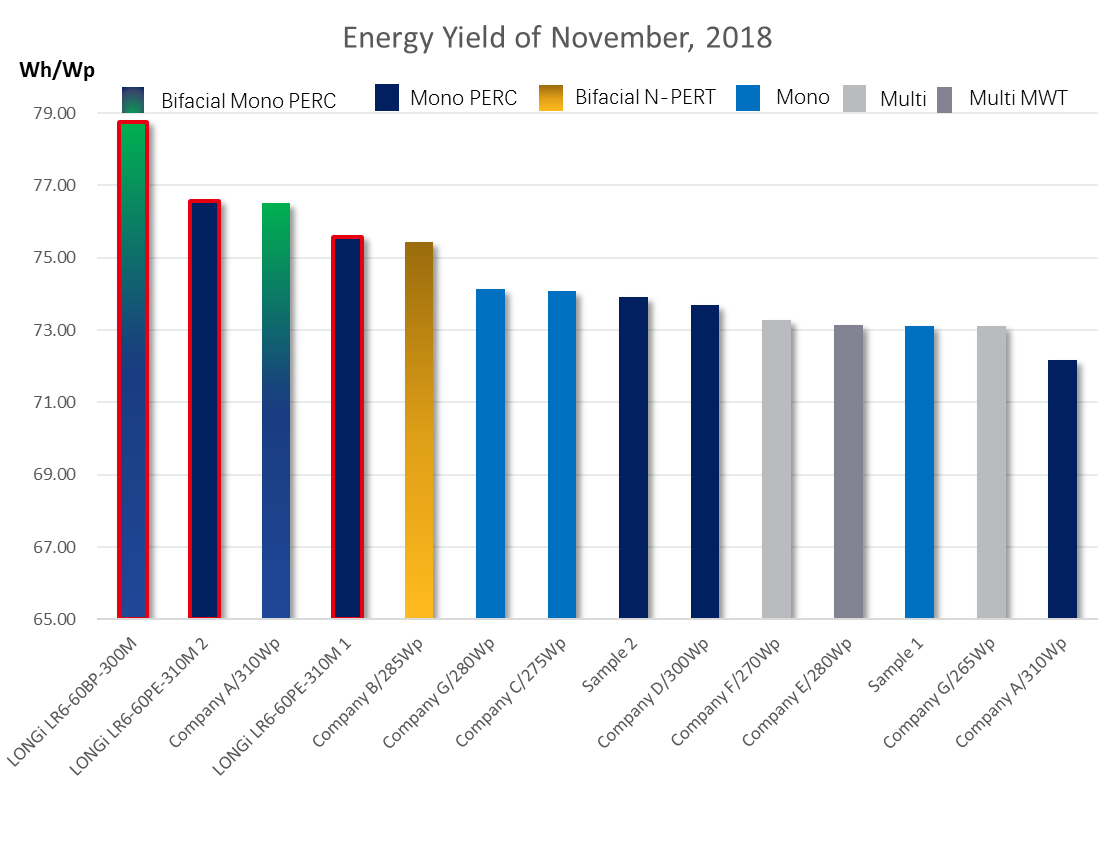
Chart #1,
energy yield scores of November, 2018
Cumulated
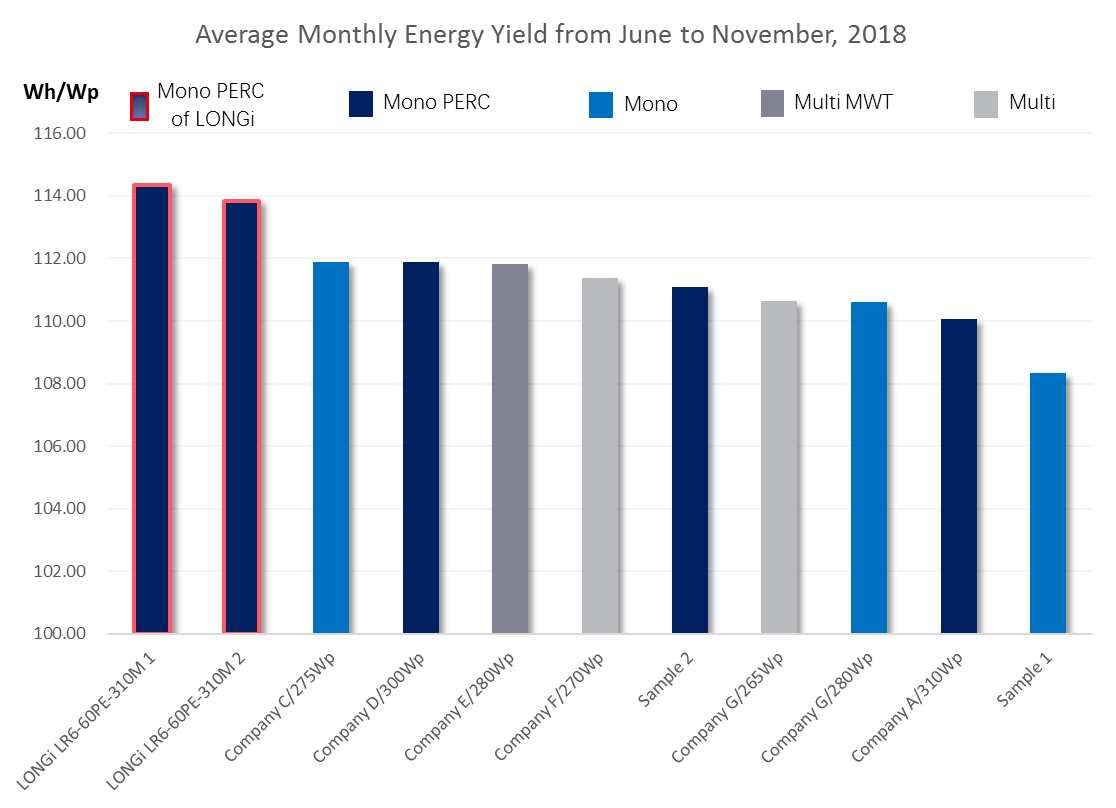
data from June to November showed the average energy yield as in below chart,
the scores of two LONGi mono PERC modules are higher than other mono modules
and module sample #1 and #2 purchased in market, with a higher rate than the
mean value by 2.92%. This result reveals the same trend as testing result from
other facilities that different cell type impact the power generation
capability, however module performance varies greatly within different
manufacturers.
Chart #2, Average Monthly Energy Yield from
June to November, 2018
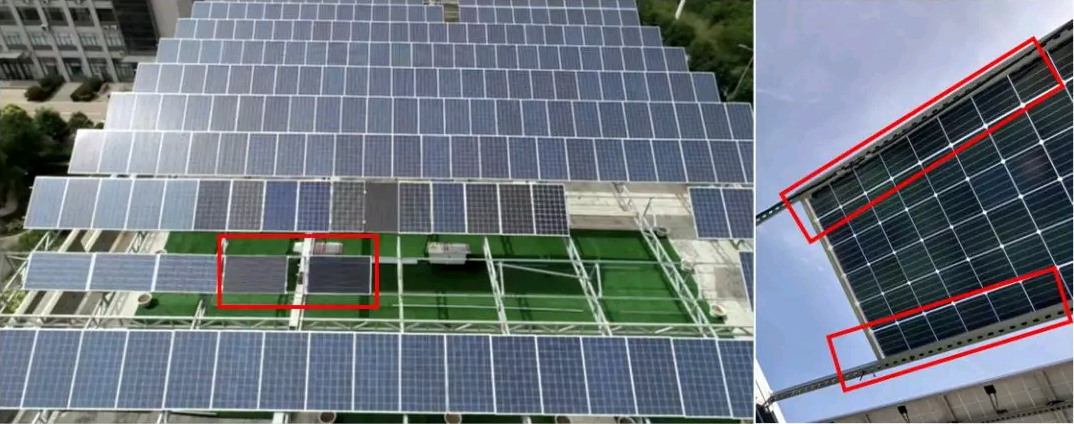
The benefit
from biface seems lower than expectation, only with the close level to those
floating installation using LONGi modules under reasonable conditions, and this
is because of two reasons. The first one is due to the lower reflection rate of
the artificial turf installed. The second one is because the bracket would
block two rows of cells near the long side of the bifacial modules.
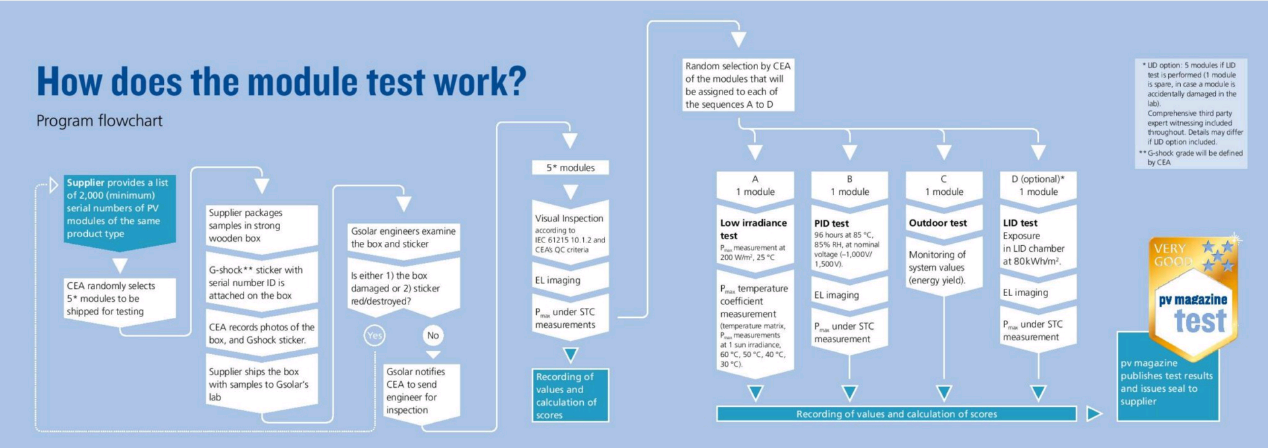
The PV
Magazine Test is a technical service jointly provided by PV Magazine Group from
Germany, CEA from United States and China’s Gsolar. The below diagram shows the
entire process. Engineers from CEA will randomly select 5 pieces from 2,000
mass-produced modules, and then firstly test their appearance and electrical
performance and EL diagram under STC conditions. After that, a series of test
will be done including low irradiance test and temperature coefficient
measurement, PID test, LID test and outdoor performance test. (Details of the
test please refer to https://www.pv-magazine.com/features/pv-magazine-test/) Previously,
LONGi modules have achieved the highest comprehensive score in performance
testing.
Other
conditions include: all the modules participating the outdoor performance test
have been exposed for several weeks to release most of the LID; module energy
yield per watt is calculated based on the power after exposure; using measuring
device with accuracy of 0.5 to test the DC output performance; going through
module-level power optimizer and connecting to string inverter of Huawei. With
all these measurements the test can eliminate those uncertainties other tests
have and truly report the energy yield capability of the modules and provide
valuable reference to PV station investors.
 Global English